● Licensed & InsuredServing Greater Los Angeles · (747) 888-1445

People treat them like rivals, but most good floors use both. Here's the straight story so you can pick the right one.
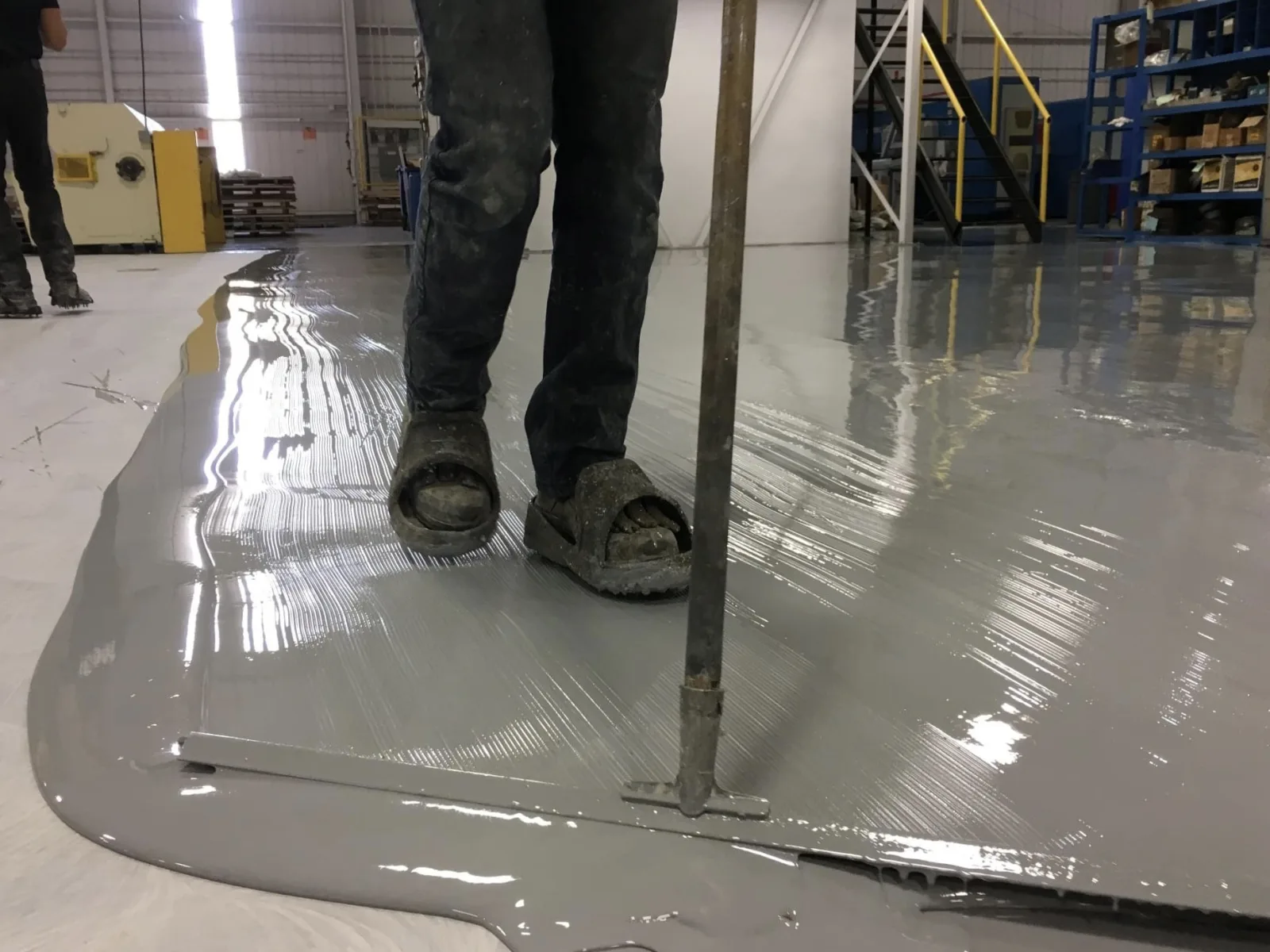
Epoxy and polyaspartic are both good coatings. They just do different jobs. On a lot of home garages we run an epoxy base coat for a strong bond and thickness, then a polyaspartic topcoat that cures fast and won't yellow in the sun. Here's how they stack up:
| Epoxy | Polyaspartic | |
|---|---|---|
| Cure time | Slower, a day or more per coat | Fast, cures in hours |
| UV stability | Can amber in direct sun | UV-stable, resists yellowing |
| Build / thickness | Thick, strong base layer | Thinner, flexible topcoat |
| Durability | Excellent | Holds up well, takes more scuffing |
| Best use | Base coat / interior | Topcoat / sun-exposed areas |
| Cost | More economical | Costs more |
Bottom line: don't get hung up on "epoxy vs polyaspartic." Tell us how you use the space and where it is. We'll spec the right system, usually an epoxy base with a polyaspartic topcoat.
Epoxy is a thick, rigid resin that builds a hard, high-adhesion base coat on prepared concrete. Polyaspartic is a fast-curing, more flexible, UV-stable coating most often used as the topcoat. The strongest floors use both: an epoxy base for build and bond, and a polyaspartic top for speed, clarity and sun resistance.
Neither is better on its own, they do different jobs. Polyaspartic cures faster, resists yellowing in sunlight and handles temperature swings well; epoxy is thicker and bonds strongly to a properly ground slab. We get the best result by combining them rather than choosing one.
A quality polyaspartic topcoat is UV-stable and resists the ambering (yellowing) that bare epoxy can show in direct sunlight. That is exactly why we finish floors that get natural light with a polyaspartic top coat.
Often yes, if the existing coating is sound and properly cleaned and abraded first. We assess the current floor before quoting; if it is peeling or failing, it needs to be removed and the slab re-prepped so the new system bonds correctly.
Because polyaspartic cures quickly, most garage floors are completed in a single day. You can usually return light foot traffic the next day and drive on it within a couple of days. Exact cure time depends on temperature and the system used.
We'll recommend the right buildup for your floor. Free, and no pressure.