
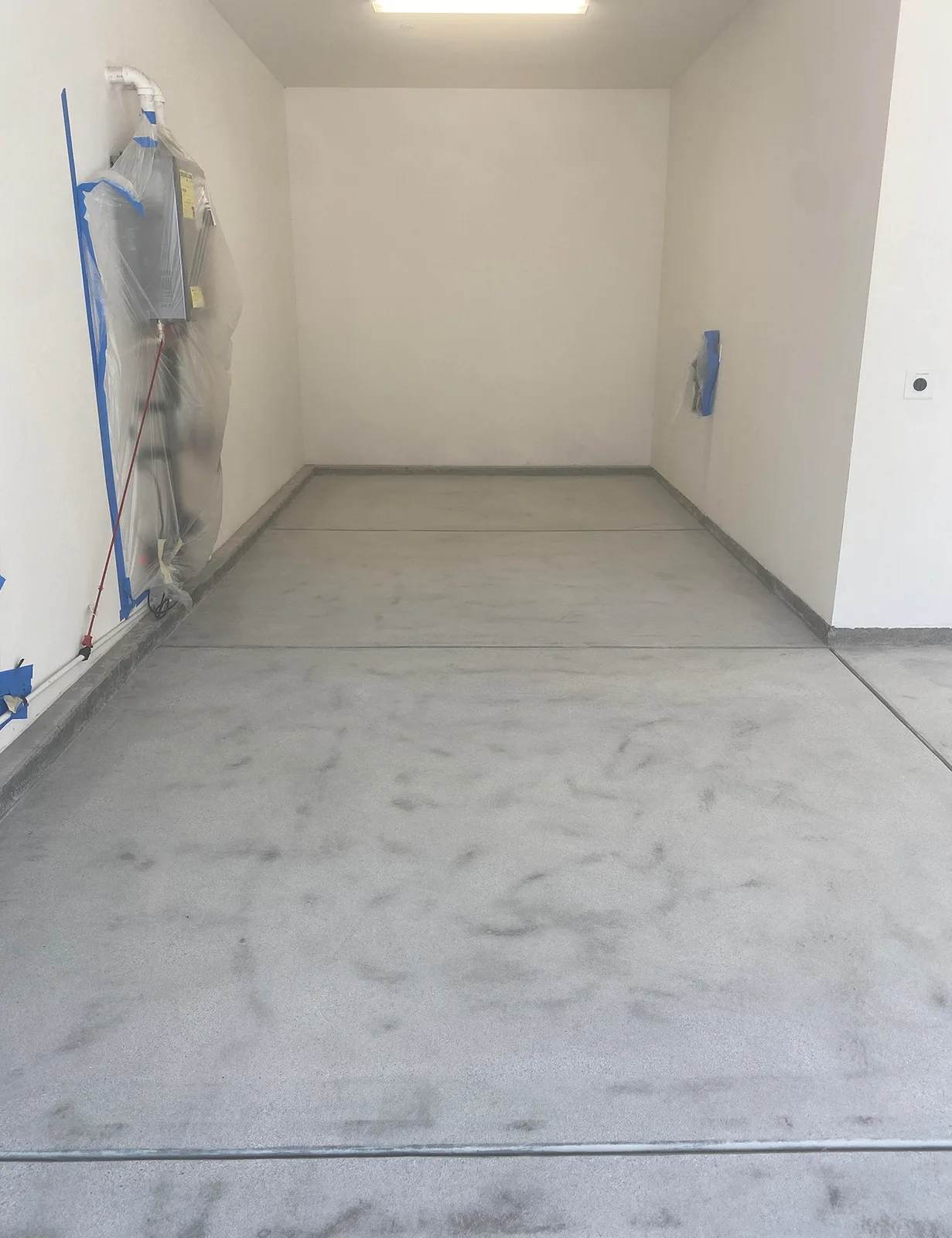
"Polished concrete or epoxy?" is one of the most common questions we hear from Los Angeles homeowners, property managers, and business owners. They look similar in photos, but they are completely different systems. Polished concrete grinds and refines the slab you already have. An epoxy floor coating bonds a new surface on top of that slab. One refinishes the concrete; the other replaces the wear surface entirely.
We are Epoxy Experts Flooring, a licensed LA contractor specializing in epoxy and polyaspartic coating systems. We do not install polished concrete, so we will be upfront: for some spaces, polished concrete is the smarter choice, and we will tell you so. The goal of this page is to help you decide correctly. When epoxy is the right call, you will know exactly why, and we will be ready to help.
Why choose Polished Concrete vs. Epoxy Flooring: An Honest Comparison
Ideal for
- Homeowners deciding between polished concrete and epoxy for a garage or interior floor
- Garage and patio owners who want a durable, slip-controlled, easy-clean surface
- Business and property owners comparing flooring for retail, office, or light commercial space
- Anyone with a concrete slab and questions about moisture, cracks, or recoating
- LA-area buyers who want an honest recommendation before spending on a floor
How it works
- Define how the floor will be usedGarage, shop, patio, kitchen, retail, or living space? Heavy chemical and vehicle use leans epoxy. A large, low-traffic interior with a minimalist look may favor polished concrete.
- Decide on look and colorWant a specific color, flake blend, or metallic effect? Choose epoxy. Happy with a natural, stone-like concrete sheen and few color options? Polished concrete may fit.
- Have the slab assessed for moisture and cracksThis is the step most people skip. We moisture-test and check for active cracks. A wet or moving slab changes the right answer. We would rather find that out before any product goes down.
- Weigh upfront vs. long-term costPolished concrete often wins on lifetime cost; epoxy wins on chemical resistance, color, and a fully sealed surface. Decide which matters more for your space.
- Factor in slip needs and timelineNeed real traction or a fast turnaround? An epoxy and polyaspartic system is usually finished in a single day, with anti-slip built into the topcoat.
- Get a real, slab-specific quoteOnce you know the use, look, and slab condition, we give you a free quote for the right epoxy system, or a straight heads-up if polished concrete is the better call.
Recent work

FAQs
Which lasts longer, polished concrete or epoxy?
Polished concrete generally lasts longer because the finish is the slab itself, with nothing on top to wear through. Epoxy is a coating with a wear life, but a quality epoxy base with a UV-stable polyaspartic topcoat is very durable and, when it eventually wears, can be recoated rather than fully replaced. Both are long-term floors when installed correctly on a sound slab.
Is epoxy or polished concrete better for a garage?
For most LA garages we lean toward an epoxy and polyaspartic system. It resists oil, gas, brake fluid, and road grime, wipes clean easily, comes in colors and flake blends, and we can build in anti-slip traction. Polished concrete is a fine garage floor too, but oil staining is harder to remove and it offers fewer ways to add grip and color.
Can epoxy be installed over a cracked or damp concrete slab?
Sometimes, but only after we check it. Active, moving cracks can telegraph through a coating, and moisture pushing up through the slab can blister or delaminate epoxy because the coating is not breathable. We moisture-test and inspect cracks first. If the slab needs mitigation or repair, we tell you, and if it is not a good epoxy candidate, we will say so.
Which one is more slippery?
Both can be slick when wet if finished smooth, and high-gloss polished concrete is especially slippery with standing water. The advantage of epoxy is that we can broadcast an anti-slip additive into the topcoat to set the traction level you need for a garage, patio, ramp, or wet area. Adding grip to polished concrete after the fact is harder.
Is polished concrete cheaper than epoxy?
It often costs less over the long run because there is no coating to recoat, but upfront pricing for both depends heavily on slab condition, repairs, square footage, prep, and the finish you choose. We never quote a flat number sight unseen. We assess your actual slab and give you a clear, honest price for the system that fits.
You install epoxy, so why would you ever recommend polished concrete?
Because recommending the wrong floor costs you money and costs us our reputation. For a large, low-traffic interior with a minimalist look, or a slab with moisture issues, polished concrete can be the better fit, and we will tell you that. When epoxy is the right call, you will know exactly why.
How long does an epoxy floor take to install?
With our epoxy and polyaspartic systems, most residential projects are completed in a single day, though timing depends on slab prep, repairs, moisture conditions, and square footage. We confirm the realistic timeline for your specific floor when we quote it.
Not Sure Which Floor Is Right? Let's Figure It Out Together. →